Designing my Own Deck Shape! The Perfect Hybrid Board? | Open Source Skateboards
Short version: Beau from Open Source Skateboards made me a custom deck from a shape I designed in their SK8CAD tool: an 8 1/8 inch symmetrical board with blunted ends, a mellow quarter-inch concave and 18 degree kicks, meant to handle both street and freestyle. The construction held up perfectly with no delams or bubbles. The blunted ends were the best call, and next time I’d add a bit more concave and keep the default kick radius.
I’ve been frustrated with deck shapes for a long time. Since about 2003, I’ve had two separate setups going at any given time: one for transition and street, and one for flatground and freestyle. All I’ve wanted that whole time is a single board that can do it all. So when Beau, the creator of Open Source Skateboards, offered me the chance to design my own shape, I jumped at it.
Here’s what I was going for: a bit wider than normal so I have space for my freestyle wheels, with blunted ends for Caspers and truck stands, but still standard in most ways so it’s still good for street. Beau made it for me and sent it out from his company. I’ll get into the specifics of my design and review it at the end.
What is Open Source Skateboards?
Beau and I did an interview over email, and he recorded his answers for the video. He started OSS because he wanted a symmetrical deck but couldn’t find one. He couldn’t find published specs for boards either, so he took inspiration from open source tech.
I like the idea of publishing specs like that. Back in the 80s, they used to advertise decks in extreme detail, with the wheelbase and tail length and all that stuff. Now, you’re lucky to get anything more than the width.
And Beau takes the open source part of it seriously. You can use his CAD tool to design a board, and use his methods and videos as a reference to do it yourself. His method is to vacuum press the veneers over a foam mold and finish the boards by hand, which is what makes custom boards affordable.
Why do all pro shapes look the same?
The next thing I asked him was why most pro board shapes are so similar. He wasn’t totally sure, but it works for business, and less customization makes manufacturing easier. OSS is about constant progression. There’s still stuff we can learn from experimenting, and if we have the option, it only makes sense to try. You can’t blame the board for everything, but customizing it makes a big difference.
I was thinking about this a lot. How many people can say they’ve designed their own shape? Outside of a few who worked at deck companies, not too many. Pros can customize their shapes, but they’re never going to be too crazy. Why? Like Beau said, it’s about marketability. You can’t make 400 shapes so everyone has a great one for themselves. You make a few that have mass market appeal.
The idea that every person can come up with their own shape and push their own skating is really cool, especially from a brainstorming perspective. Maybe enough people will want a certain thing that mainstream deck companies start making it.
What people actually order
I wanted a symmetrical board for my shape, and Beau skates one too. His own preferred deck sounds pretty standard: 7 plies of thicker veneer, environmentally friendly, and fully symmetrical, which there aren’t many of on the market. So I asked about his average customer. Most OSS riders go with symmetrical too. Some get asymmetrical boards, and some experiment with different sizes on each end so they can try both at once.
So when they’re given the option, people either go symmetrical or try something new. I asked about his craziest experiment, and he told me about the caterpillar: extra long kicks with the trucks mounted on the tails.
I don’t see that one getting popular, but the fact that it exists is really impressive. Think about trying to order that board somewhere before OSS. You’d have to get molds made and hire out a woodshop to put it together, and you’d probably have a huge minimum order to fill too. Here, they can just whip it up and test it out.
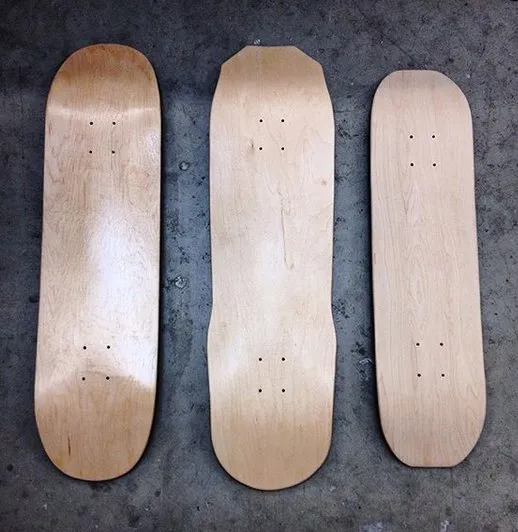
They can also test different materials. Beau has used local woods and bamboo, and he even made a denim skateboard, which got nasty. He’ll try to make a board out of just about anything. He’s also getting into graphics, with laser engraving, one or two color printing, and staining or dyeing.
As for the future, Beau sees OSS pushing the limits of gear and of how we understand boards and the way we use them, and building a community of progression and individuality.
My shape, spec by spec
I recorded my SK8CAD session on their website, so here are all the choices I made.
Width: 8 1/8. That’s a size that’s not super easy to find. I have a setup with trucks designed for a 7.75, but with freestyle wheels, I wanted some extra space so it would still be even. It turns out I maybe should have gone to 8.25, because it’s still a bit too high on the wheel side. I love my Mode freestyle wheels, but it’s been next to impossible to get them to fit on anything.
Wheelbase: 14. The wheelbase is the distance between the inner bolt holes on your board. That’s something I didn’t understand correctly. I thought it was measured from the middle of the truck, or where the wheel would be, so I first gave Beau a much higher number. He let me know that it was weird to have a giant wheelbase, though he was willing to make it of course. 14 is the standard.
Concave drop: 1/4 inch. Beau’s number for a typical drop was 3/8 of an inch. I went with a quarter inch, which is mellower than usual, just to see how it felt. With freestyle stuff, steep concave sometimes isn’t great. But I think I’d give myself a little more next time. I found it was harder doing double and triple kickflips, though this is also the widest board I’ve skated, so that’s part of it. Keep in mind that the same drop feels mellower on a wider board, because the same distance up and down is stretched over more space.
Nose and tail length: 6.75. That’s just the distance from the bolts to the end. I did 6.75 for both, which is the standard number in SK8CAD, and it felt good.
Nose and tail angle: 18 degrees. This is how steep the kicks are. It defaults to 20, but for stuff like Caspers, really steep tails make it harder to hang on. So I bumped it down a little, and I liked how it turned out. I didn’t have any problem with pop, and I think it was a good call.
Kick radius: 10. This is how flat the pocket is. If the radius was 0, the board would be flat and then go straight to the full kick angle. A higher number means more transition and a lower tail, so you can get the same angle without the tail being as high. I tweaked it modestly from 9 to 10, which feels good for impossibles. Pressure flips were a little tougher with my normal foot position for them, though. That’s the kind of thing you just don’t know until you mess with it. Next time I’d probably stick with the default.
Nose and tail shape: 0.8. This gave me blunted ends. That’s good for Caspers and stuff because you have a more solid base, but it also helped with spinning tricks, especially frontside. You have a much bigger corner to pop and push around. It helped a lot more than I was expecting. This was a good pick.
There’s a lot more available than just SK8CAD, too. Some boards aren’t available in the tool, so I could have emailed Beau and gotten something truly custom like the Foster board, or different cuts like freestyle tails or a hammerhead.
How the board turned out
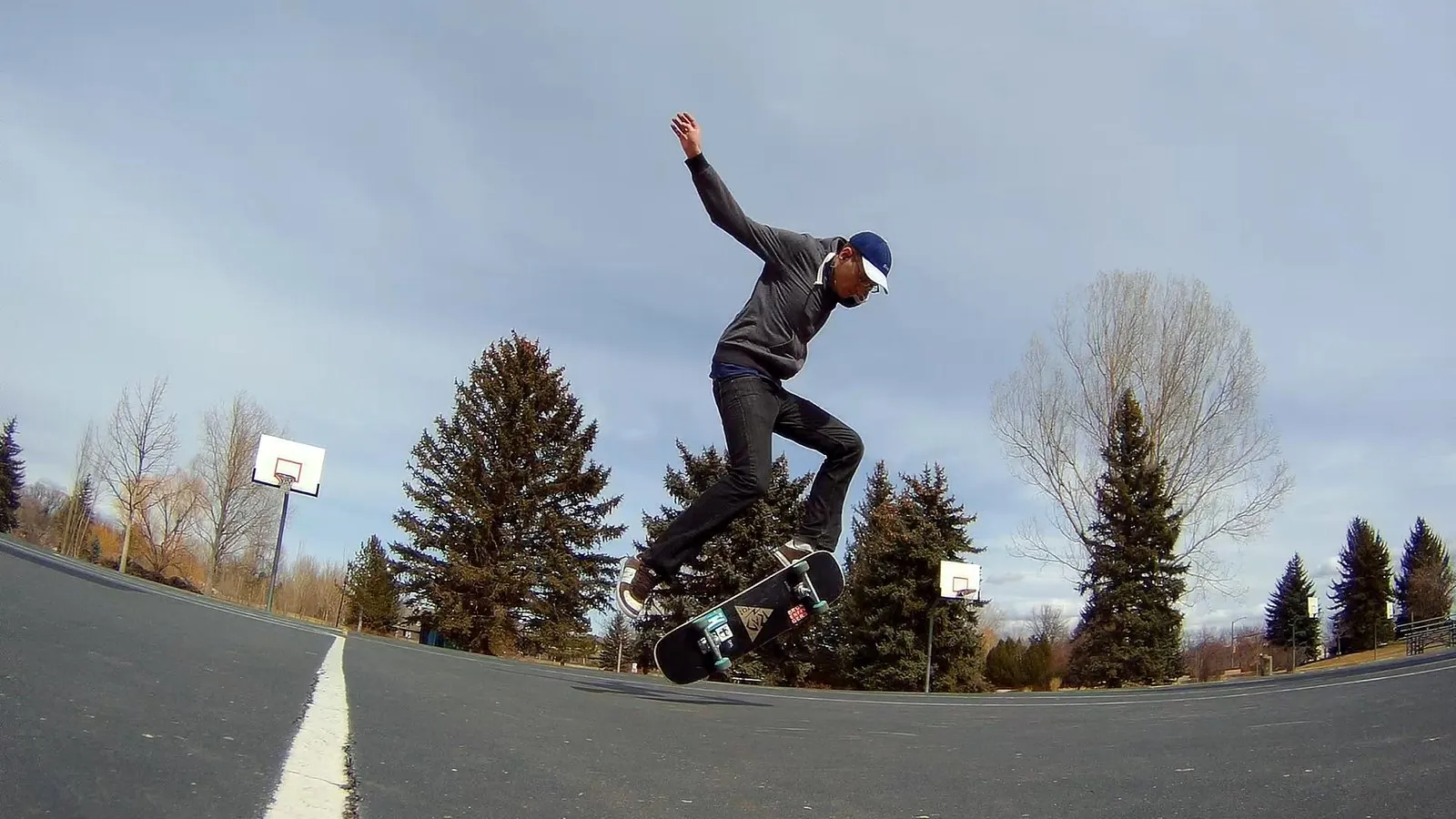
I had Beau laser engrave my logo on it, but I probably should have given him a reversed image, because you can’t see the border of it. That’s okay.
The one thing I was skeptical about was the actual pressing process. The reason he can make so many different kinds of boards is the foam molds and vacuum sealing, and I was picturing the vacuum bags you use to pack clothes for a move. But holding the final product, there’s no problem at all. I’ve skated it quite a bit now, and I haven’t gotten any delams or bubbles or anything like that. From a construction standpoint, it’s working perfectly. I’d change the concave and some other stuff next time, but in general, I’m really happy with the experience.
How to design your own board
When I made this video, there were three ways to get a board from OSS: come to a workshop in San Diego, go through their school program, or design a board on the website or send Beau an email with what you want. Or you can use their resources to make your own without them.
He and I did everything by email. He’s a great design resource too. He has more experience with the effects of different deck tweaks than anyone, so he can definitely help. He also has more videos and tutorials if you want more info.
Open Source Skateboards is still around. You can find custom boards, workshops and SK8CAD on their website if you want to try your hand at designing a deck of your own. Thanks to Beau for being on the channel. It was nice working together.