Ocean Howell - From H-Street to History Professor
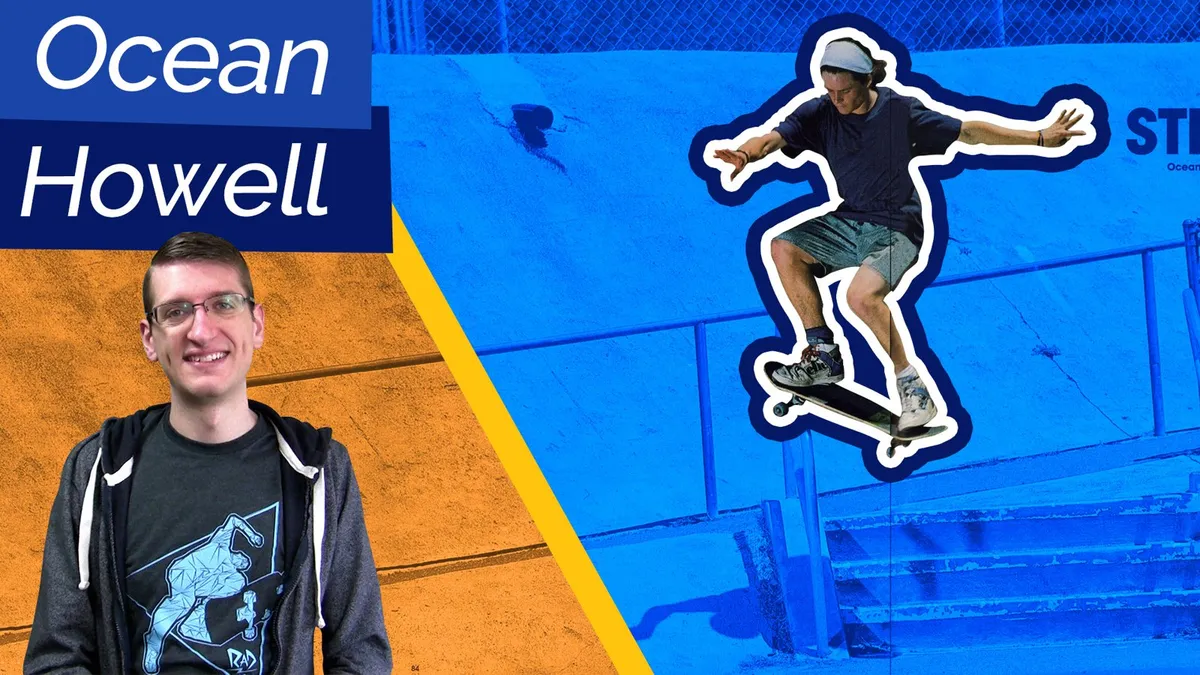
Short version: Ocean Howell got on H-Street in 1989 as a teenager from Oceanside, made his name with a smooth, powerful style in Next Generation (1992), then moved to Birdhouse. Burned out by the mid 90s, he put himself through college with skateboarding money, earned a master’s in architecture and a Ph.D. from Berkeley in 2010, and became a history professor at the University of Oregon. He wrote Making the Mission: Planning and Ethnicity in San Francisco (2015).
Ocean Howell is one of my favorite 90s skaters. He has one of the best styles ever, right up there with Tom Penny. But he disappeared and hasn’t made a real video part in years. What happened to him? Let’s take a look at his career.
He was an amazing skater, but he never really got the chance to blow up. Some people think he just picked the wrong sponsors. I think there’s a little more to it.
Oceanside and H-Street
Ocean was born Erik Ocean Howell, but his parents called him Ocean from birth. His parents were divorced, so he grew up between Oceanside and Carlsbad. He started skating around 1984, at 11, on an old Nash board.

He skated all through middle school and high school, looking up to H-Street as it launched in 88. H-Street put out Shackle Me Not, one of my favorite 80s skate videos. It had such a casual, fun vibe. If I could have picked a team back then, it would have been H-Street.
“Yeah, H-Street was my first board sponsor. That all came about through Alf. He lived in Oceanside and used to always see Mark Wyndham and I skating around. He told Ternasky about us and organized a session up in Carlsbad to meet up and possibly film.”
Ocean and Mark Wyndham grew up together and were on the same team for a long time. They both joined H-Street right as it was wrapping up Hokus Pokus in 1989.
“Yeah, Ocean”
The video was already finished by the time they joined, credits and all, so they couldn’t be added properly. They skated with Mike Ternasky for one day, got some clips, and threw them in. Ocean got a frontside boardslide, and his only credit was in the voiceover.
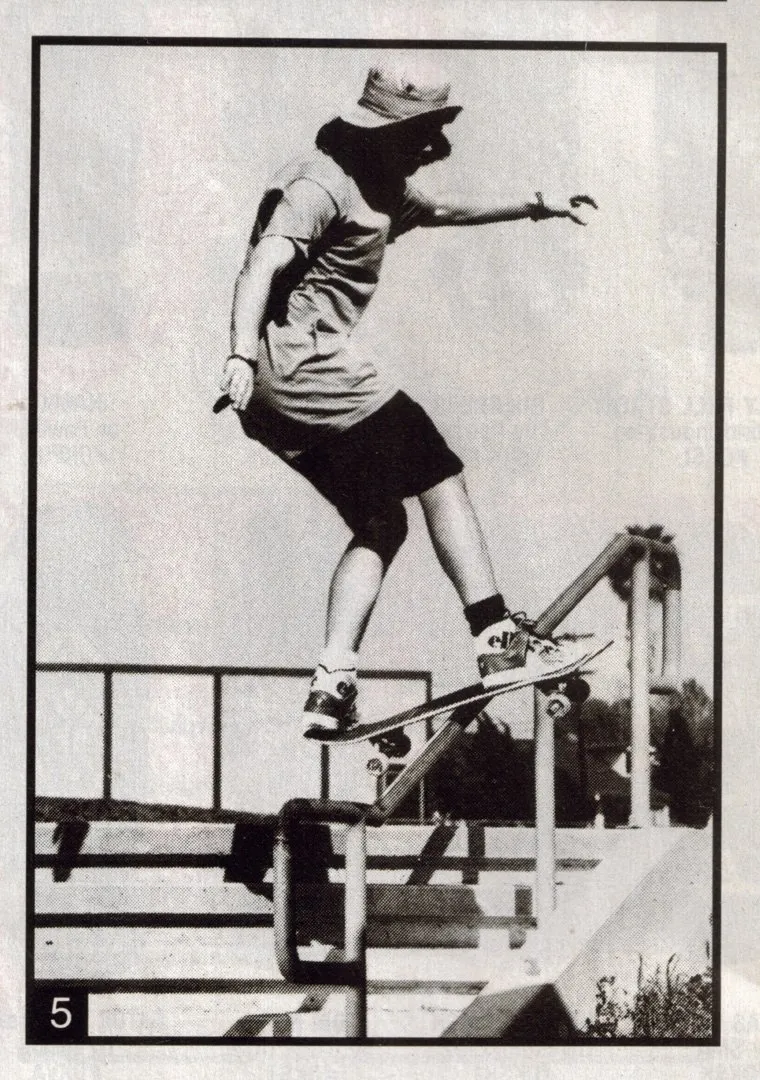
It’s such a small throwaway thing. Mike just says his name real quick for credit. But it became a famous line. Skate videos were sacred back then. These days you watch a part once and move on, maybe rewatching favorites every couple of years. Back then skaters didn’t have much to watch, so they rewatched the same tapes until they wore out, and any little quote or skit became instantly famous. Ocean says people wrote “Yeah, Ocean” on their griptape and yelled it at him all the time. It still happens, decades later.
Mark got the same treatment. He had some handrail tricks in the video, and Mike introduces him as Markus. That’s his real name, but he never went by it, so he was kind of upset they got it wrong.
Risk It and Next Generation
Ocean’s real video debut came in Risk It by Speed Wheels, though it wasn’t his best work:
“I was actually pretty bummed on that part. I was coming off an ankle injury and a lot of the stuff in there were just tricks I’d screw around with. Basically lip tricks on curbs. Not stuff that I necessarily wanted in a part.
But yeah, that was 1 or 2 days of filming. My ankle was still pretty jacked so I wasn’t up to my normal level.”
Can you imagine? The serious filming schedules wore on him later, but back then it was a couple of days. It’s not his most impressive part, but it’s still good. You can see a lot of his style, and it looks like a lot of fun. I think it has the first bigspin front foot impossible, but I’m not entirely sure. See more about front foot impossibles in Who Really Invented the Merlin Twist?
The same year, H-Street put out Not the New H-Street Video, but Ocean wasn’t in it. I wasn’t able to figure out why. He was in Next Generation, H-Street’s 1992 video. He spent a year filming for it, and in some ways it’s his first real video part.
It’s a lot more technical than his earlier stuff, but that’s what skateboarding was like then. There’s even a pressure flip in there. He says he wasn’t a big fan of all that once it was done:
“I will say that after Next came out, I knew that I wanted to step away from a lot of those more intricate tricks and start focusing on more straight-forward stuff. But I liked it for the time, sure.”
Even with the tech tricks, the focus is always on style. Think about what everyone else was doing. You could bounce a trick off the ground and it was fine. He’s still skating with speed and landing clean. It’s fun to watch today, but it’s even more impressive in context.
“Everywhere you looked, people were just flinging stuff around and hoping for the best. Pop and pray. Boards bouncing off the ground mid-trick actually became a common thing. We used to joke about people waxing the ground in order to get that perfect bounce to land their tricks. It was terrible.
My friends and I were probably most critical because it was so close to what we were doing. We did those tricks, too! Just not like those guys!
We always wanted to pop everything. Catch everything. We wanted to skate with at least some speed and some power. That meant a lot to us. It wasn’t just about landing the trick. If it looks like garbage, who cares? But those guys made everyone else doing that particular style of skating look so bad. They gave it all a bad name for such a long time.”
Leaving H-Street
By the time Next Generation came out, Plan B was already releasing videos. Mike Ternasky had left, taken a lot of the team with him and started Plan B. Looking back, the people who went to the World Industries side did a lot better. The guys still on H-Street, or brands like Powell, were in a much tougher spot.
Ocean actually asked Mike about getting on Plan B. Mike said he’d get back to him and never did. I wonder how things would have turned out. Honestly, probably not much different, considering the direction his life took. But still.
“I was psyched on H-Street but it all became so unsettled. It was like everyone was expecting it to fall apart, so it became almost like a self-fulfilling prophecy. It seemed like everyone suddenly felt the need get out. The company did end up continuing on strong, although in a different shape… but for me, after the Next Generation project, I felt like it was time for me to move on.”
So he put out feelers. Kris Markovich invited him onto 101, and he even met with Natas, and everything seemed fine, but he never heard back. There was a rumor that Rodney Mullen vetoed it, but he never knew for sure.
Then he saw Tony Hawk right around when Birdhouse was launching and asked about it. Tony did get back to him, and he joined the team.
Birdhouse
At this point Ocean was still am, which is hard to believe after that part. H-Street hadn’t wanted to turn him pro off a single guest trick; they wanted to wait until his full part came out. With the industry the way it was, he jumped to Birdhouse instead, and faced the same thing: they wanted footage establishing him as a Birdhouse rider first.
He toured with the Birdhouse team, which included Matt Beach, Andrew Reynolds and Heath Kirchart. From stories I’ve seen from people at those demos, Ocean’s performances were pretty inconsistent. Sometimes he’d spend the whole demo trying one trick and never land it. Other times he was awesome.
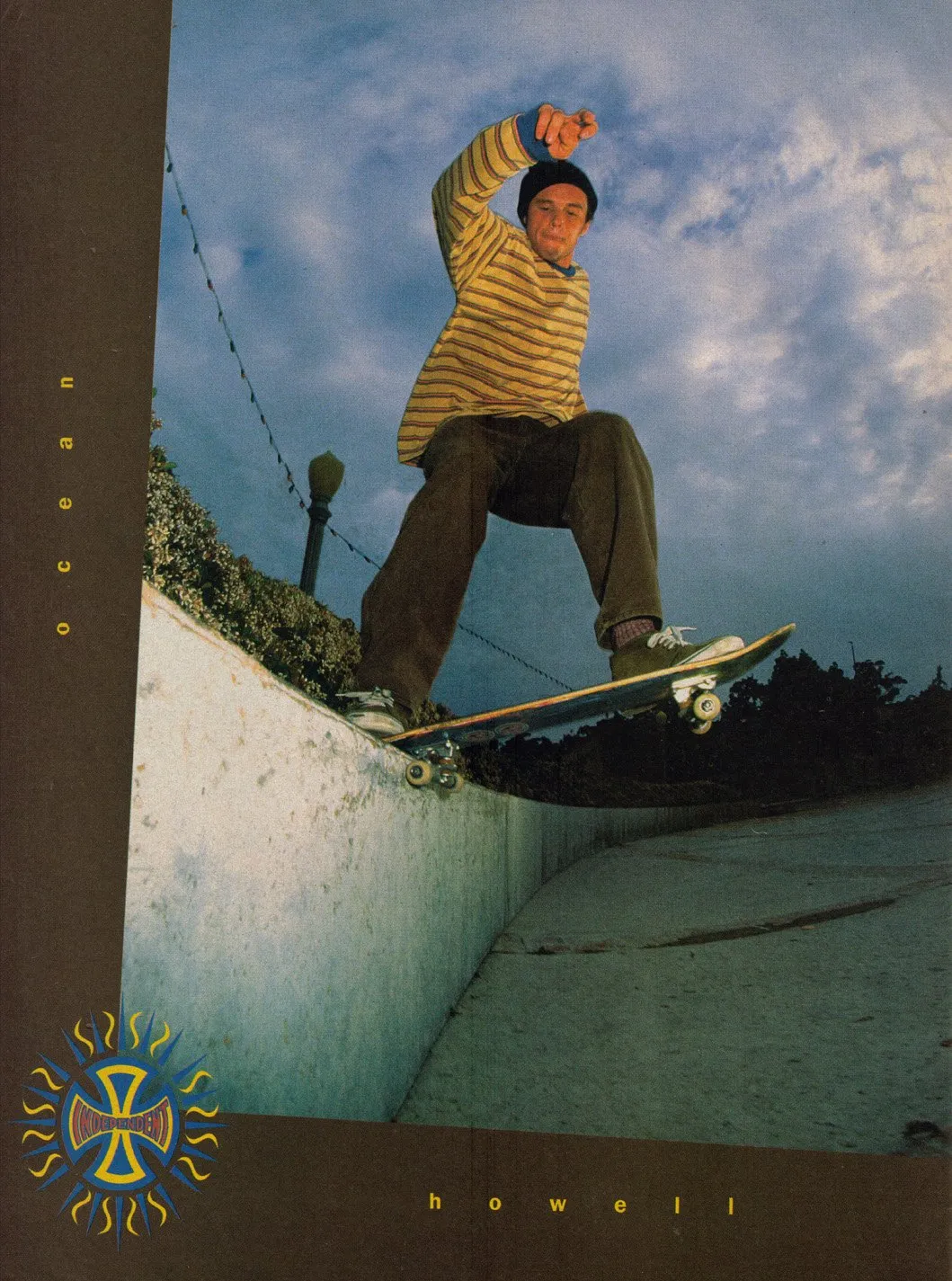
Birdhouse put out two videos in 1993, Untitled and Ravers. In these parts he’s coming up with some really sophisticated manual stuff, like a frontside flip fakie manual, and a hilarious manual backside flip that has its own story:
“I remember doing that and feeling pretty hyped until the person who filmed it comes up to me afterwards and matter-of-factly says, ‘Oh, I screwed that up. Sorry.’
That’s not an edit, that’s literally where the clip starts! But that tells you about both the era and our sensibilities towards making the video. A clip where the entire beginning of the trick is missing still gets used. Who cares? No one’s gonna think that I faked getting into a manual on a curb. Just go with it!”
He says Tony was trying to build a different feel at Birdhouse than at Powell, where everything was about production value. You want a video to look good, but you don’t throw away good footage over it. Compare that to now: shoot the trick of the year, but the filmer’s shadow is too dark? Toss it.
Burnout and college
Two parts in one year was starting to wear on him.
“I didn’t have a great attitude about things during that time. I had the classic feeling of ‘I made it to where I want to be and it’s not what I’d hoped for’. I’m sure a lot of people go through that.”
He was burned out enough that his career was basically over. He kept doing ads for a while, but his attention drifted from skateboarding and he started college.
“After about two years or so, I just got bored. So yeah, for the rest of my career after that, I was in college, too.
Skating basically funded my education. My parents paid my tuition, but I paid my most of my expenses throughout college with money from skating and it just so happened that my career ended around 6 months after I graduated. It worked out perfectly.”
In the 90s, cartoony graphics were huge, but Ocean didn’t like that look. He fought it at first and slowly gave up.
Then he studied abroad in Europe, and that was basically it. He just stopped answering. He wasn’t asking for boards and was barely skating, and he wasn’t doing ads, demos or videos. Eventually a check came that said “last one,” and that was the end of his pro career, at least for the time being.
Architecture, Berkeley and The Poetics of Security
He was focused on architecture by then, and moved back to California for a Ph.D. at Berkeley. He already had a bachelor’s in modern literature and a master’s in architecture. His research is about urban planning and the development of San Francisco, including how public spaces like libraries and museums get built in poorer neighborhoods.
He did write about skateboarding, though. His article The Poetics of Security is about having a kind of split identity in the same city: as a skater he’s looking for spots, and as a person he’s looking for a quiet place to eat lunch, and he experiences the same places in completely different ways. It gets into how architecture can be judgmental: sitting here is okay, but there are skate stoppers, and spikes so homeless people can’t lie down. It’s dense academic writing, for example:
“Even though these spaces fall short of the ideal democratic space, the fact is that the marginalized were still conceived of as a presence. While these spaces took it as their duty to gently coerce the dispossessed, thus acknowledging the presence if not the necessity of conflict, the new public spaces have taken up the task of obviating competing viewpoints and the presence of the people who advance them.”
Skating again, for himself
The cool thing was that he was still in San Francisco. He knew a lot of skaters there and ended up filming a little.
“Someone would turn the camera towards me every once in a while and I was able to get a couple things. I didn’t mind filming, especially if it was just for me. I didn’t really have any projects I was working on so why not try to get a clip or two? It was fun and got me back in touch with why I fell in love with it in the first place.”
That turned into a mini part in an iPath promo. He didn’t get back into pro skating, because he couldn’t commit the time. His terms for potential sponsors were:
“I told them that I wasn’t going to skate any demos, I wasn’t going to tour and I certainly wasn’t going to skate any contests. And also, I was only going to film when I felt like it.”
Unsurprisingly, that didn’t get very far.
He also turned up in two house videos, which is barely a thing. Six Newell is about a house at 6 Newell and the crew from around there, and Ocean has a cameo. Again, he wasn’t filming for it; he just let his friends use some footage.
“With the exception of a few clips, I was never actually filming for anything specifically. Even with my iPath part, that was all stuff I just happened to film while out skating. I never intended for there to be a part… although I really love that one. But it’s really just me screwing around as an old man.”
The other is the Howard House video, from a house he lived in with other skaters, known for being a complete dump with rotted floors. It was filmed in the early 2000s but came out years later. I love how laid back it is. He does a really long line, lands a 360 a little sketchy, then does a 50-50 and nollies out of it for some reason. You can tell he’s not doing it for a paycheck. He’s just cruising and having fun. There’s some good stuff too, like the wallrides and a 180 nosegrind alley-oop 180 out.
Where is Ocean Howell now?
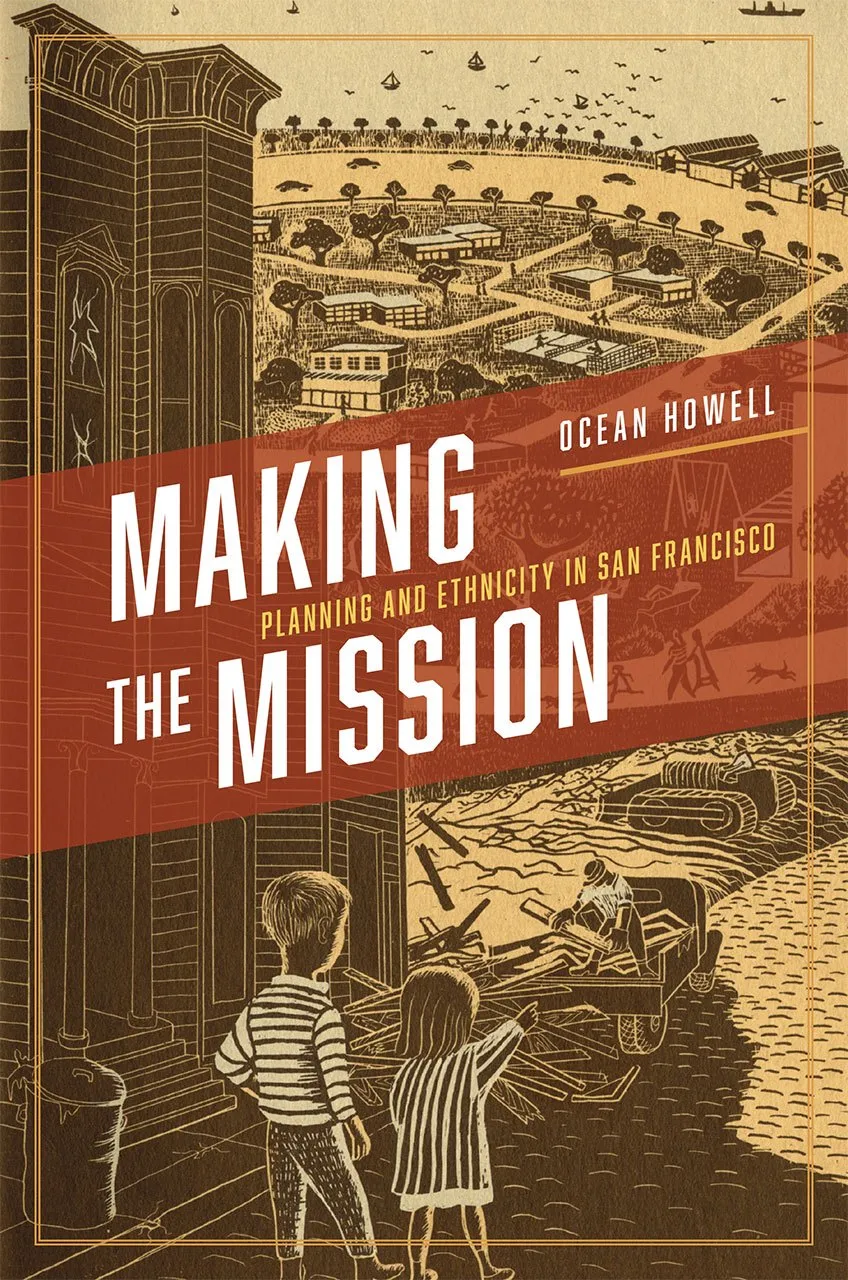
He finished his Ph.D. in 2010 and took a job as a history professor at the University of Oregon. In 2015 he published a book, Making the Mission: Planning and Ethnicity in San Francisco, about urban planning versus the will of the people. If you know the area, it’s worth a look.
Sources
- Making the Mission: Planning and Ethnicity in San Francisco
- The Poetics of Security: Skateboarding, Urban Design, and the New Public Space
- H-Street Skateboards - Shackle Me Not (1988)
- Speed Wheels - Risk It (1990)
- H-Street Skateboards - Not the New H-Street Video (1990)
- H-Street Skateboards - Next Generation (1992)
- H-Street - Hokus Pokus (1989)
- iPath Promo
- Six Newell
- Ocean Howell - Howard House video part
- Ocean Howell Mixtape