Tony Hawk's Gameboy Trilogy Review
Short version: Tony Hawk’s Pro Skater 1, 2 and 3 all got Game Boy Color versions. The first plays more like 720 and Skate or Die than Pro Skater, the second adds a real career mode but isn’t fun, and the third is surprisingly good for its time. None of them are worth playing today except out of historical interest.
Today, we’re going to take a look at Tony Hawk 1, 2 and 3 on the Game Boy Color. These games have been released on a ton of different systems. I reviewed the main versions of them all already: PlayStation, PlayStation 2 and Xbox. But there are also Game Boy Color and Game Boy Advance versions of most of the Tony Hawk games too, and it’s about time I get into them.
Tony Hawk’s Pro Skater 1: basically 720 and Skate or Die
Tony Hawk 1 on the Game Boy was very inspired by 720 and Skate or Die, which makes sense. The hardware limitations of the Game Boy Color are pretty much the same as the NES, so I get that they would take some inspiration there. But this game resembles those games more than it does Tony Hawk 1 on other systems.
There are 3 modes, or more like 2 and a half.
The halfpipe mode
First is the halfpipe mode. Just like Skate or Die, you get a halfpipe and only a couple of buttons to try to do tricks with. This control scheme works better, but you still only have 2 buttons, so it’s not going to be very smooth.
First you can pick your character. You get the skaters you would expect. They all have different stats, but honestly, you should just go with Tony Hawk. He gets the most air, and although his acceleration isn’t the best, you can do more tricks per air.
After that, you pick your pipe, which all act the same, and you start skating. Here’s how it works: A and a direction will do a grab, B and a direction will do a flip trick.
The grabs are methods, indy nosebones, tailgrabs, and japan airs. I give them a little credit for the trick selection. They could have easily picked melon, indy and nosegrab. But the flips are completely terrible.
You have impossibles and 360 shove its, which are the exact same animation. Really? If you don’t know the difference between the two, then just pick something else! There are hundreds of flip tricks to pick from! What about just a shove it and an impossible? That would be pretty much zero extra work. But no. They picked this, and weirdly, heelflips. You’ll see that with the whole series. They always go with heelflips over kickflips when they have the choice. There’s nothing wrong with that, it’s just weird. Kickflips are a lot more iconic, and even non-skaters know the trick.
The last one is a backflip, which isn’t technically a flip trick, but that’s okay. You can also tap A to do spins. Unlike in Shaun Palmer, you can’t spin and do tricks together. You just do one or the other.
Build up combos in typical Tony Hawk style, and try to get a high score. When your run ends…. Nothing happens. There’s not even a leaderboard or high score totals or anything. In a way, I get it because the game doesn’t save, but still. The whole mode is basically pointless.
1 on 1 vs. CPU mode
There are two other modes. Let’s take a look at 1 on 1 vs. CPU mode. Catchy name, eh?
So it is what it says it is. You race down a course against a computer-controlled character. This is just exhibition mode for the tournament, but we’ll get to that in a second.
Your character selection matters a little bit more in this mode. It’s basically a different game and everyone has different stats. Acceleration is more important this time. Steve Caballero is a good way to go because he’s the most balanced, but it’s not easy no matter who you pick.
Once the race starts, you just have to go up until you reach the end, but there are a few things you can do while you’re riding. There are boosts, which you can do by double tapping up. There are a limited amount of them that you can do throughout the race. You can earn more somehow, but I’m not totally sure how that works.
You can also grind on stuff. This has very limited usefulness. The point of it is that you can ride on top of ledges instead of running into them, but you can’t accelerate while you grind, so don’t do it unless you’re already at top speed. You can collect money too, but it doesn’t really serve any purpose in this mode.
The best thing about this whole game though, are the tricks. You have two tricks you can do, stalefishes and indys. Again, props for not reusing the tricks from the other mode. While you’re in the air, tap up or down with A, and the game cuts away to a full-screen drawing of your skater doing the trick.
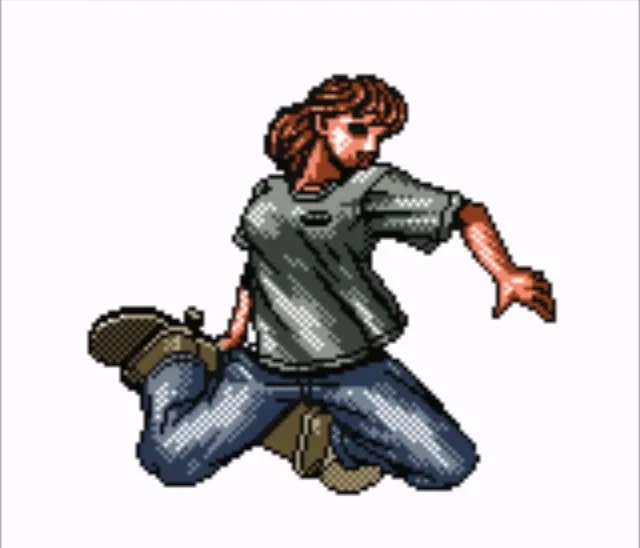
Yeah, that’s right. The tricks are a cutscene, and don’t even happen in real time. I could not stop laughing when I first saw this. This is seriously the best they could do?
They put some work into it too. Not every character has a custom drawing, but there are at least a few different ones, and Elissa Steamer’s is different, which is cool. They did put some effort into it, but it’s clear that they had no idea what they were doing.
Tournament mode
Ok, let’s get into the tournament mode. I was expecting that this was going to be street skating finally. Collect SKATE, secret tapes, and that type of stuff. That’s what the main Pro Skater game is all about, right?
Yep. It’s just the race mode again, just with more competitors. You can also collect tapes too, and your tricks actually count for points now. At the end of the race, you’re scored based on all that stuff instead of just your placement.
This is pretty hard. You always seem like the slowest guy on screen, and the boost doesn’t help all that much. When you get up to speed, it’s tough to avoid obstacles that quickly.
At this point, you might expect to have a scored vert section. But you don’t get one. The vert has nothing to do with the career. Every time you beat a level, it takes you to the next one until you’re done. I managed to get third.
So that’s Pro Skater 1 on the Game Boy. It seems like more of an arcade game that you can sink a few minutes into on the school bus or something, instead of an actual, full game that you can sink time into. Given the era when this came out, it’s not terrible. But it’s definitely not a real Tony Hawk game either. Let’s see if Pro Skater 2 does any better.
Tony Hawk’s Pro Skater 2: a real career mode
Right when you get started, it’s obvious that they put some effort into this one. The menus and splash screens and stuff look just like the PlayStation version. You can unlock pictures instead of videos, which makes sense for Game Boy. You could even print them with the Game Boy Printer. There are boards to unlock, and a legitimate career mode. We’re off to a good start.
There are 2 different level types: flat 2D, like the Hangar, and isometric 2D, like New York. We’ll talk about the isometric ones in a second, but let’s look at the flat ones first.
You get a couple of challenges, like high scores, collect SKATE, that kind of thing. Every now and then they’ll throw in a high combo.
Pro Skater 2 controls and tricks
The controls are similar to the vert mode in the last game, but the tricks are all mapped to the same button, so you have less of them. You can do judos, methods, melons and airwalks. Again, the trick selection is a little weird. Almost like a programmer just picked some short names that would fit onscreen rather than ones that are more common.
There are two special tricks, which require more than one direction. You can do crossbone grabs, and varial heelflip liens. That’s right, the only flip trick in the whole game is a varial heelflip lien. Not a 360 flip, or a kickflip. Neither of those appear in the whole series.
What’s the other button for? Grinds! Well, grind. You can only do 5-0 grinds, although to be fair, you can do axle stalls and handplants.
Also, tapping A in the air will spin just like the last one. Everyone can do up to 720 with enough airtime, but only Hawk can go up to 900. It’s more of an Easter egg than anything though, because I don’t see when you’ll have enough air to try that. Hitting quarter pipes gives you pretty much no air.
To actually skate around and try to do combos is tough. There are no manuals, so you just have to link grinds together. The best method for that is to try to go slow, do a combo up an angled rail, then come back down. This is a theme that carries over to the next game too. Going slow is actually better because you can get a higher multiplier. And since you don’t balance, it’s not that tough.
Except for the controls. It’s really awkward and I never really got used to it. I also cheated a lot to start the game with the best deck. Decks have stats, but your character doesn’t. There are a couple upgrades you can get throughout the career. But there’s a lot you can’t do with the base stats, like getting a few of the SKATE letters.
The isometric levels
So those are the flat levels. There are also the isometric ones, which are a little too ambitious for the Game Boy Color.
You can steer up and down and go at angles to the different obstacles. Just like other games like this, like Shaun Palmer, it can be weird lining up grinds, because you technically move up in the level design when you jump. But it’s not too bad. The controls are the same, but it’s just harder to get around and find stuff. In one spot, you actually have to ride through a drop on the handrail to get a letter. It’s imprecise and kind of a gamble to actually land it. With the time ticking down, it can get really frustrating.
The flat levels play better, but it’s just harder for them to hide collectibles. They had to try to do some kind of 3D movement, but they do this a lot better in the next game.
That’s Pro Skater 2. Honestly, not disgustingly bad, but completely pointless in 2018. I just think it’s interesting to see how skate games were done in 2D before the more recent batch of them, like Skate Ride and Skateboard Lines. So it has some kind of historical interest, but it’s not fun! It’s not like you’ll actually want to bust out a Game Boy and play with this instead of True Skate or anything.
Tony Hawk’s Pro Skater 3: surprisingly good
The last game on the Game Boy is Pro Skater 3, which is surprisingly good.
The general idea of the career mode is the same as the last one. Again, they did a good job copying the style of the main game. But they got too ambitious again.
In general, there are a lot of good improvements here. You get a stat point every time you beat a challenge, and there are more of them per level. They also fixed the isometric stuff. Instead of being able to turn left and right, you can only carve into the next section on quarter pipes. You get less freedom, but it works better.
It takes a little bit of memorization to know how to get around the levels, because there aren’t always quarter pipes where you might want them. But they did a pretty good job.
They also added in balance meters and manuals, which are a welcome improvement.
Two buttons isn’t enough
The only thing that really holds this game back is the Game Boy itself. With only 2 buttons, the control scheme is too difficult.
You have grabs mapped to the A button. Kind of the same stuff that you’d expect at this point: nosegrab, melon, rocket air, tailgrab. But you have to tap the button quickly. If you hold it, you’ll do a 360, and that’s really hard to land unless you have a TON of airtime. You can upgrade your spin stat, but it’s a lot easier to just avoid it.
The B button has flip tricks, which AGAIN are weird. There are heelflips. Well, technically 360 heelflips. You spin on everything and you don’t have any control over it. There are also ollie norths, 360 shove its and body varials, which just look like regular varials. These take a lot longer, so you’ll bail a lot of the time when you try.
And the controls flip based on which way you’re going. So melon isn’t always left. It’s sometimes right. So you’ll do the wrong trick a lot.
The biggest problem is, there are also grinds. Nosegrinds, crooked grinds, 50-50s. And these are also controlled with B and a direction.
That’s right! Flips and grinds are the same controls. You’ll find yourself doing a flip trick right as you land a lot, at least in the beginning. There is a trick to it though.
Flip tricks are a direction, then B. Grinds are hold B, then a direction. So a heelflip nosegrind might be left B, then hold B left. As you can imagine, that gets really confusing really quick. With the insane high score requirements in this game, you just have to get used to it. That’s it. You’ll get some muscle memory for some basic combos, but you have to mix things up to keep your score high.
Goals and the Skater Island contest
Luckily, there’s more to do than just high scores. You can light the furnaces in the Foundry by grinding on a switch, collect SKATE letters, and all kinds of other stuff. Some of them don’t make sense though. Link 4 tricks on a log. Well, there are two logs. You can’t combo through a turn, so it has to be one or the other. Is it a 4 trick combo on a log, or is it 4 different combos on a log? It’s neither. I never beat that one. And you can’t look it up either. This game has nothing on GameFAQs.
But you’ll figure out enough that you’ll unlock some levels and then you get to Skater Island. Which is a contest. Which means being able to consistently get high scores over 3 runs. I got completely stuck here for a while, so I just decided to get good.
Just like Pro Skater 2, going slow is your best bet here. You can get a huge combo going on flat by just doing tricks and landing in manual. You get a tiny speed boost when you land in a manual, so you can’t just stay in place and do tricks forever.
This worked out for me, because believe it or not, the black guy in shorts is actually Rodney Mullen, and he starts with a good balance stat.
All you have to do is find a good spot with some long rails, and jump into and out of grinds and manuals as many times as possible. It’s all about the multiplier. With some practice, you’ll be able to get tens of thousands of points per combo.
It sounds pretty easy, but don’t forget how awkward the controls are. Having to left B, B left all the time is going to make you bail. Lose a combo or two, and the whole contest is shot. I eventually got third and earned 5 stat points.
The game goes on a bit. There’s actually a lot of content and different levels here, but after a while, it all feels the same.
Are they worth playing today?
So there’s Tony Hawk 3 on Game Boy. Again, not too bad for the time. If the Game Boy Color was all you had in 2001, you could at least get enough out of this to understand why the series was so popular. It has enough of the spirit of the games that it’s enjoyable in some sick way.
Of course, at this point, there is no reason whatsoever to play this. There’s a Game Boy Advance version, but you could also play the PS1 version on your phone with an emulator really easily. And that game is genuinely pretty good. Check the last part of my Pro Skater 3 review to see that version.
So yeah, again, this is just kind of out of historical interest. I’m sure you’re not going to run out and try to find any of these games because they looked so good. But I have a serious illness. I have to play every skateboarding game I can find. In a way, I think I’m just becoming an expert on every way skateboarding games have failed, and I’ll have some good ideas of what it would take to make a good one. But of course I don’t have the ability to actually make anything like that, so it’s just kind of worthless academia.
But anyway, that’s it for the Game Boy Color. There are a lot of handheld Tony Hawk games. I want to tackle the GBA versions soon. There are a lot of them, so I can’t just do them all at once. I think it goes from 2 to Downhill Jam. So we’ll see how that goes.
Same game
More on these games